When most people think of window tinting, they imagine privacy, style, or cooler interiors. But there’s another angle many drivers overlook: health. The sun doesn’t just heat up your cabin; it quietly delivers harmful ultraviolet (UV) radiation that can affect your skin, eyes, and long-term wellbeing.
That’s where window tinting near me searches make sense. For drivers in Montrose, CO, where the sun shines bright across open highways, professional tinting from Premium Auto Solutions does more than enhance your ride—it helps safeguard your health.
The Hidden Health Risks Inside Your Car
You may not realize it, but every commute exposes you to UV radiation. Even with your windows closed, those rays penetrate glass and reach your skin. Over time, this adds up. Think of it as a slow drip—one that can cause premature aging, wrinkles, or even more serious health issues.
Understanding UV Radiation and Its Effects
What Are Ultraviolet Rays?
UV rays are part of the electromagnetic spectrum, invisible to our eyes but powerful in effect. They’re categorized based on wavelength, and two types—UVA and UVB—pose the most risk to humans.
UVA vs. UVB: The Difference That Matters
- UVA rays penetrate deeper into the skin, accelerating aging and increasing cancer risks.
- UVB rays are shorter but more intense, often responsible for sunburns.
Together, they create a dangerous duo for unprotected drivers.
How UV Radiation Affects Human Skin
Exposure breaks down skin cells, damages DNA, and disrupts natural repair. Over years, this translates into fine lines, spots, and higher cancer risks. The left side of the face—closest to the driver’s window—is especially vulnerable.
The Impact of UV Rays on Eye Health
Your eyes are just as sensitive. UV rays contribute to cataracts, corneal damage, and long-term vision problems. Squinting against glare isn’t just annoying—it’s your body’s defense against invisible harm.
The Role of Vehicle Glass in UV Exposure
How Standard Car Windows Handle UV Light
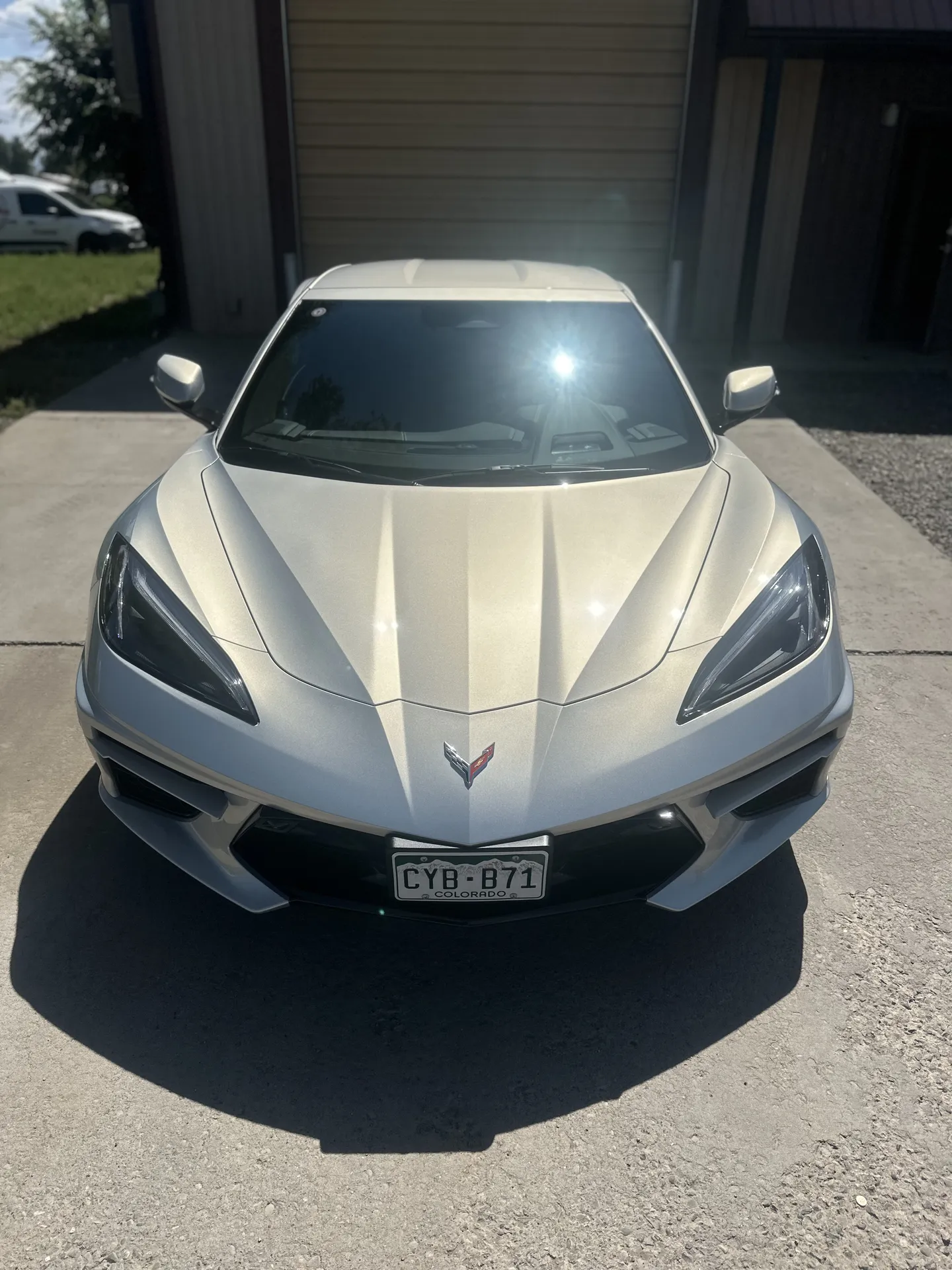
Windshields are often laminated to block some UV, but side and rear windows typically allow most UVA rays to pass through. That’s why your arms, face, and neck still feel the effects.
Why Clear Glass Isn’t Enough for Protection
Clear glass may give you a sense of safety, but studies show it lets in the majority of harmful rays. Without tint, your car becomes a moving greenhouse—amplifying risks with every trip.
How Window Tinting Blocks UV Radiation
When sunlight hits your car, it carries three main components: visible light, ultraviolet (UV) radiation, and infrared (IR) heat. Standard glass blocks only part of this spectrum, allowing much of the UV to slip through. Window tinting acts as a filter, intercepting harmful rays before they reach you or your car’s interior.
The Science Behind Tinting Films
Think of window tint like a multi-layered shield. Each film is made of specialized materials that absorb, reflect, or scatter different parts of sunlight. Here’s how it works:
- Absorption: Dyes or particles within the film capture UV radiation, stopping it from passing through.
- Reflection: Metallic or ceramic particles bounce portions of UV and IR radiation back outward.
- Selective Filtering: Modern films are engineered to let in visible light (so you can see clearly) but filter out the invisible rays that damage skin, eyes, and interior materials.
This balance ensures you get comfort and protection without driving in the dark.
Ceramic Films vs. Dyed and Metallic Films
Not all tint offer the same level of defense. The type of film you choose determines how effectively UV is blocked.
Ceramic Technology and UV Rejection
Ceramic films are the gold standard in modern tinting. Using nano-ceramic particles, these films:
- Block up to 99% of UV rays, reducing risks of skin cancer, wrinkles, and eye strain.
- Filter out infrared heat, keeping cabins cooler without requiring a dark shade.
- Maintain crystal-clear visibility with no haze or distortion, even at night.
- Avoid interference with GPS, mobile signals, or radio waves (a common issue with metallic tint).
It’s like upgrading from a basic umbrella to a high-tech UV-blocking canopy that protects you every mile.
Stability and Durability of Tinting Materials
Longevity matters. Over time, cheap dyed films can fade, bubble, or peel—losing their protective power. Metallic films may hold up longer but often cause signal disruption.
Ceramic and carbon films, by contrast:
- Stay stable under intense sun exposure.
- Resist fading and discoloration.
- Provide consistent UV and heat rejection for 10+ years with proper installation.
This durability means your UV protection isn’t temporary—it’s a long-term investment in health and vehicle preservation.
Window tinting doesn’t just make your car look sleek—it’s a science-driven barrier that blocks harmful radiation, keeps your cabin cooler, and protects your health every time you’re behind the wheel.
Health Benefits of Window Tinting
Lowering Risks of Skin Cancer and Premature Aging
Tinting reduces cumulative UV exposure, significantly lowering risks of skin cancers like melanoma, along with sunspots and wrinkles.
Protecting Eye Health on the Road
By filtering out harmful rays and glare, tinting helps preserve eye health, reducing strain and preventing long-term vision conditions.
Reducing Headaches and Fatigue from Sun Exposure
Less glare means fewer squints and less tension. Many drivers report fewer headaches and more relaxed driving after tinting.
Window Tinting as a Preventive Health Measure
Why Drivers Should Treat Tint Like Sunscreen
Think of tinting as a permanent sunscreen for your car. It’s always on, always protecting, without needing reapplication.
Benefits for Children and Sensitive Passengers
Children’s skin and eyes are especially vulnerable to UV damage. Tinting offers a year-round shield, making rides safer for every passenger.

Window Tinting and Interior Air Quality
Preventing Interior Material Off-Gassing
Heat and UV exposure cause plastics and vinyl to break down, releasing chemicals into the air. Tinting helps prevent this degradation.
Reducing Heat Stress and Breathing Comfort
Cooler cabins mean less strain on your body, especially on hot Montrose afternoons. Breathing feels easier when your environment is more comfortable.
Local Relevance: Window Tinting in Montrose, CO
Why Montrose Drivers Face Higher UV Exposure
Montrose sits at a higher elevation, meaning thinner atmosphere and stronger UV intensity. That’s why protective measures matter even more here.
How Premium Auto Solutions Supports Community Health
At Premium Auto Solutions, the focus is on quality window tinting Montrose, CO drivers trust. By using high-grade films and precision installation, the team helps protect both your vehicle and your health.
Beyond Health: Added Comfort and Safety Benefits
Reducing Interior Heat for Safer Driving
Lower cabin temps reduce drowsiness and keep you alert—a direct link between comfort and safety.
Minimizing Distracting Glare
With glare under control, your eyes stay focused on the road, improving reaction time and confidence.
Common Myths About UV and Tinting
Many drivers hold misconceptions about how UV protection works with window tinting. These myths can lead people to make poor choices when selecting a film.
Myth: Only Dark Tint Protect from UV
A common assumption is that the darker the tint, the stronger the UV protection. That’s not true.
- Reality: UV protection comes from the material and technology inside the film, not its shade. For example, ceramic and carbon films can block up to 99% of harmful UV rays, even if they look relatively clear or light.
- Why it matters: Drivers who want legal compliance or prefer a lighter look can still enjoy full protection. The myth leads some to choose illegally dark shades unnecessarily, which may cause safety or legal issues.
Myth: Factory Glass Provides Full Protection
Many people think their factory-installed glass already blocks all harmful rays.
- Reality: Standard factory glass may block some UVB rays (the ones that cause sunburn), but it typically lets most UVA rays pass through. UVA rays are the main culprits behind premature skin aging and skin cancer.
- Why it matters: Even if your car has factory-tinted privacy glass, it usually protects only from glare and heat—not the long-term health risks of UV exposure. Adding professional tinting film provides true UV defense.
Choosing the Right Window Tinting Near Me
Once you understand the myths, the next step is learning how to pick the right tinting solution.
What to Look for in Quality Tinting Films
Not all films are created equal, so it’s important to focus on performance over appearance.
- Look for films with UV rejection ratings (ideally blocking 99% of UVA and UVB rays).
- Check if the product has certifications or test results proving UV and infrared blocking ability.
- Choose materials known for stability, such as ceramic or carbon films, since they don’t fade, bubble, or lose effectiveness as quickly as dyed films.
This ensures you’re buying protection, not just a darker window.
Why Professional Installation Matters
Even the best film won’t work properly if installed poorly.
- DIY risks: Bubbles, peeling edges, or dust under the film can weaken protection and shorten the lifespan of the tint.
- Professional benefit: An experienced installer ensures proper fit, smooth application, and maximum performance of the film. They also understand local laws, so you stay compliant while getting optimal UV protection.
Think of it like sunscreen—you wouldn’t leave patches of skin uncovered. Professional installation ensures complete and lasting coverage.
Navigate from Delta to Premium Auto Solutions Now
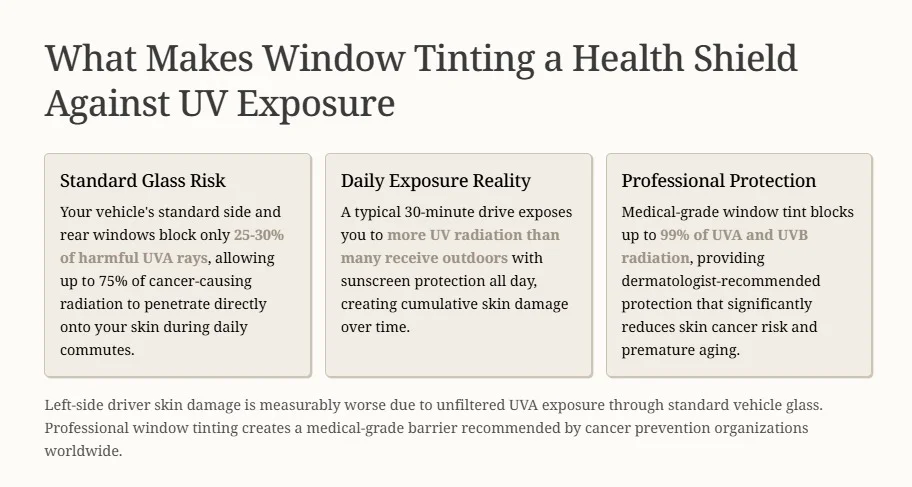
What Makes Window Tinting a Health Shield Against UV Exposure
- Standard Automotive Glass UV Protection:
- Blocks only 25-30% of harmful UVA rays (the main cause of skin cancer and premature aging)
- Allows up to 70-75% UVA radiation to penetrate vehicle side and rear windows
- Drivers receive more UV exposure during a 30-minute commute than many get outdoors with sunscreen all day
- Left side of drivers’ bodies show significantly more sun damage due to UVA exposure through windows
- Professional Window Tint UV Protection:
- Blocks up to 99% of UVA and UVB radiation
- Provides medical-grade UV protection comparable to high-SPF sunscreen
- Reduces cumulative skin damage, lowering risk of melanoma and other skin cancers
- Recommended by dermatologists and cancer prevention organizations worldwide
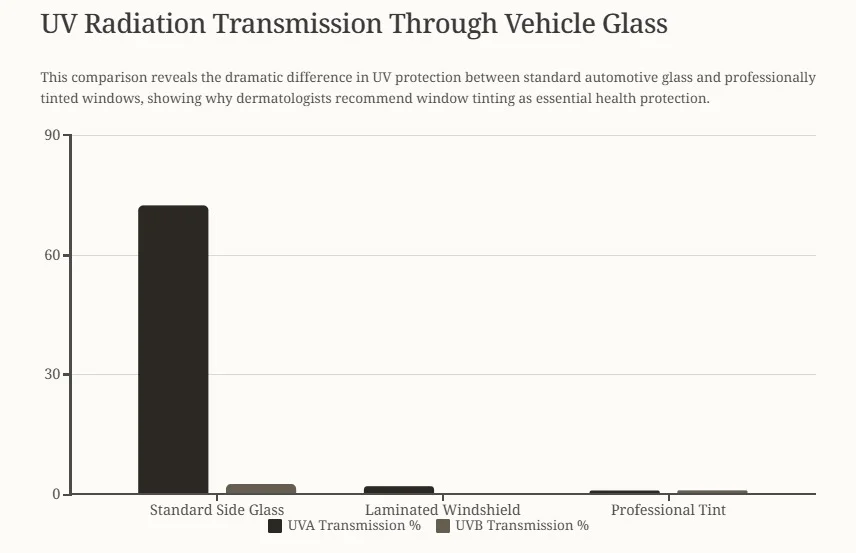
Visual Chart: UV Radiation Transmission Through Vehicle Glass
Glass Type UVA Transmission (%) UVB Transmission (%) Standard Side/Rear Glass 70 – 75% ~0 – 5% Laminated Windshield ~2% ~0% Professionally Tinted <1% <1%

Sources: Skin Cancer Foundation (2025), Cancer Council Australia (2025), Accutint NW (2025)
Protecting Health Through Smart Choices (H2)
Window tinting isn’t just about aesthetics—it’s about health. By blocking harmful UV radiation, it helps prevent skin damage, eye strain, and long-term risks. For drivers in Montrose, CO, the stakes are even higher due to stronger sun exposure. That’s why partnering with trusted experts like Premium Auto Solution makes sense. With the right tint, your car becomes more than transportation—it becomes a safe space for you and your passengers.
FAQs
Q1: Does window tinting completely block UV rays?
High-quality films, especially ceramic, block up to 99% of harmful UV rays.
Q2: Can window tinting reduce my risk of skin cancer?
Yes. By lowering long-term UV exposure, tinting significantly reduces risks.
Q3: Does lighter window tint still protect from UV?
Absolutely. Even lighter films can provide strong UV protection if engineered properly.
Q4: Why is tinting more important in Montrose, CO?
The higher elevation means stronger UV intensity, increasing risks for drivers.
Q5: Is window tinting safe for children and pets?
Yes. Tinting protects sensitive skin and keeps cabin temperatures cooler for safer travel.
