
Window tinting is often discussed in terms of style or privacy, but its role in energy efficiency is equally important. In hot climates, fuel economy is directly influenced by how much strain is placed on a vehicle’s cooling system. Drivers who live in regions where the sun is intense for most of the year are constantly challenged by heat entering their vehicles. This heat forces air conditioners to work harder, and the extra demand eventually increases fuel consumption.
By understanding how window tinting functions and its effects on temperature control, drivers can make informed decisions about efficiency. Tinting does not directly save fuel in the way engine upgrades might, but it changes conditions inside the vehicle that indirectly affect fuel usage. This article explores these connections, focusing on how tinted windows contribute to better performance, reduced costs, and improved driving comfort in hot climates.
Why Fuel Economy Declines In Hot Regions
Air Conditioning As A Major Fuel Consumer
Air conditioning systems require additional power from the engine, which increases fuel consumption. In hotter climates, AC often runs for long periods without breaks. This constant load reduces efficiency and adds extra pressure to the engine. Over time, this daily usage leads to noticeable fuel costs.
Cabin Heat Buildup From Direct Sunlight
Cars exposed to direct sunlight heat up quickly due to the greenhouse effect. Sunlight passes through clear windows and gets trapped inside, raising cabin temperatures. Drivers then turn on AC at maximum levels to bring the heat down. This repetitive process uses more fuel than moderate climates.
Extended Driving Hours In High Temperatures
In hot regions, drivers often face extended periods of high temperatures during travel. Whether on long commutes or regional highways, cars remain exposed to solar radiation for hours. This keeps AC systems running at high capacity throughout the trip. Consistent high use lowers overall fuel economy significantly.
What Window Tinting Actually Involves
Definition And Function Of Window Tinting
Window tinting is the application of thin protective films to vehicle glass surfaces. These films are designed to reduce glare, block UV rays, and limit heat penetration. Tinting improves visual comfort for drivers while protecting the cabin interior. Its primary value lies in temperature management inside the car.
Types Of Films Used In Window Tinting
There are multiple tinting options including dyed, metalized, hybrid, and ceramic films. Dyed films are cost-effective but less efficient in blocking heat. Metalized films reflect heat but may interfere with signals. Ceramic films are the most advanced, providing maximum heat rejection without reducing visibility.
Installation Process And Durability Factors
Professional installation is recommended for lasting results, as DIY methods often cause bubbles and peeling. High-quality films are resistant to fading, ensuring consistent performance. Proper installation also ensures compliance with regional visibility laws. With good care, films can remain effective for many years.
How Window Tinting Lowers Cabin Temperatures
Blocking Infrared And Ultraviolet Radiation
Tinted windows reduce heat by blocking infrared radiation that warms vehicle interiors. They also filter harmful UV rays, protecting both occupants and materials. By lowering solar penetration, tinting helps maintain cooler cabins naturally. This lessens the frequency of AC usage and preserves efficiency.
Reducing Heat Gain During Parked Hours
Vehicles parked outdoors under the sun absorb significant heat through glass windows. Tinted films minimize this buildup, allowing cabins to remain at manageable levels. As a result, AC does not need to work as hard upon startup. Reduced initial cooling effort saves fuel and energy.
Maintaining Cooler Conditions While Driving
While in motion, cars are constantly exposed to sunlight from multiple angles. Tinted glass continuously filters heat, maintaining stable interior conditions. This reduces fluctuations in cabin temperature that typically demand AC adjustments. Stability in cooling needs supports consistent fuel efficiency.

Connection Between Window Tinting And Fuel Savings
Lower Dependence On Air Conditioning Systems
Since tinted windows reduce cabin heat, air conditioners run less frequently and less intensely. This decreases the amount of fuel required for engine-powered cooling systems. Less AC use means smaller energy losses during driving. These savings accumulate significantly over long periods of use.
Efficiency Benefits For Electric And Hybrid Vehicles
Electric and hybrid cars rely heavily on stored battery power to run AC units. By lowering cooling needs, tinting preserves battery charge and extends range. For hybrids, reduced AC demand directly saves fuel. This highlights tinting as a supportive technology for energy-efficient vehicles.
Indirect Influence On Overall Vehicle Performance
Less pressure on AC and engine systems allows vehicles to operate more smoothly. The engine does not need to divert power constantly toward cooling. This balance improves the driving experience and lowers stress on mechanical parts. Over time, better performance translates into financial and efficiency gains.
Evidence From Regions With Hot Climates
Studies Conducted In Desert Environments
Research in desert areas shows vehicles with tinted windows remain significantly cooler. Temperatures inside such cars can be 10–15°C lower compared to non-tinted ones. Drivers in these regions reported reduced AC usage. The difference in comfort was directly linked to improved fuel economy.
Examples From Tropical And Humid Regions
In tropical areas where humidity combines with heat, tinting also reduces discomfort. Drivers commuting in midday traffic found their AC systems working less aggressively. Cooler conditions meant shorter cooling times after parking. These advantages confirmed tinting’s role in supporting fuel efficiency.
Feedback From Long-Distance Travelers
Long-distance drivers often face continuous sun exposure for hours. Tinted windows reduce fatigue by minimizing glare and stabilizing temperatures. Travelers noted they could run AC at lower levels during trips. These conditions resulted in measurable fuel savings over repeated journeys.
Long-Term Benefits Of Window Tinting For Vehicles
Protection Of Interior Materials From Damage
UV rays and direct sunlight damage seats, dashboards, and trims. Tinted films block these harmful rays, slowing material degradation. Interiors maintain their original condition for much longer. Reduced wear lowers replacement and repair costs for drivers.
Extended Lifespan Of Cooling Components
By reducing the heavy load on air conditioning, tinting indirectly extends AC system life. Compressors and fans do not work at maximum intensity all the time. This minimizes wear and mechanical strain. Fewer breakdowns result in lower maintenance costs.
Overall Preservation Of Vehicle Value
A well-maintained interior and efficient cooling system increase resale value. Buyers prefer cars with intact upholstery and efficient performance. Tinting contributes to both by offering protection and savings. This long-term preservation makes vehicles more attractive in the used market.
Environmental Impact Of Reduced Fuel Consumption
Lower Levels Of Greenhouse Gas Emissions
When cars consume less fuel due to reduced AC demand, they emit fewer pollutants. This directly reduces the carbon footprint of everyday driving. In hot regions with heavy traffic, the collective impact becomes significant. Tinting therefore has environmental as well as economic value.
Contribution Toward Energy-Efficient Transportation
Window tinting near me aligns with sustainable practices by cutting unnecessary energy use. Drivers achieve better mileage with the same amount of fuel. This small step adds up when applied to large numbers of vehicles. It complements other eco-friendly vehicle technologies.
Role In Supporting Climate-Adaptation Strategies
As temperatures rise globally, solutions that manage heat efficiently are essential. Tinting provides a low-cost method of adapting vehicles to climate demands. It lowers dependence on fossil fuels indirectly. This role makes it part of broader energy conservation strategies.
Common Myths And Misunderstandings About Tinting
Belief That Tinting Is Purely Cosmetic
One common myth is that tinting only improves appearance. In reality, its practical benefits extend far beyond style. From heat reduction to UV blocking, tinting serves technical purposes. Understanding this distinction helps drivers value tinting correctly.
Assumption That Tinting Has No Effect On Fuel
Some people assume tinting cannot influence fuel use. This overlooks the indirect connection between AC strain and fuel consumption. Reduced heat lowers cooling demand, which reduces fuel burn. Scientific evidence and driver experiences both confirm this link.
Concerns That Tinting Affects Driving Visibility
Another misunderstanding is that tinting always reduces visibility. Quality films are designed to allow safe levels of light transmission. Professional installations ensure clarity and compliance with regulations. Tinting enhances comfort without sacrificing road safety.
Legal And Regional Considerations For Tinting
Different Visibility Standards Across Countries
Tinting regulations vary depending on country or state laws. Most governments restrict how dark front windows can be. These standards ensure drivers maintain visibility while operating vehicles. Rear windows often have more relaxed limits.
Law Enforcement And Safety Compliance Rules
Laws also aim to help law enforcement officers identify drivers clearly. Excessively dark tint may hinder visibility from outside. To balance safety and comfort, legal limits are established. Drivers must stay within these limits to avoid penalties.
Importance Of Verifying Local Tint Regulations
Before installing any tint, it is crucial to check regional laws. Tint percentages considered legal in one area may be restricted in another. Professional installers often guide customers through compliance. This prevents unnecessary legal issues later on.
Choosing The Right Type Of Window Tint
Recommendations For Drivers In Hot Climates
Drivers in hot and sunny regions benefit most from ceramic films. These offer superior infrared rejection and UV protection. Metalized or hybrid films may be used in moderately warm climates. Choosing the right film depends on local conditions.
Benefits Of Professional Installation Services
Professional installation ensures durability and effectiveness of the film. Experts apply the tint smoothly without bubbles or gaps. They also use materials that comply with legal standards. This guarantees both performance and safety compliance.
Long-Term Value Of High-Quality Films
High-quality tinting films provide consistent performance over years. Unlike low-grade products, they resist fading and peeling. While they cost more initially, the savings in fuel and repairs balance the investment. This makes them a practical choice for serious drivers.
Navigate from Olathe to Premium Auto Solutions Now
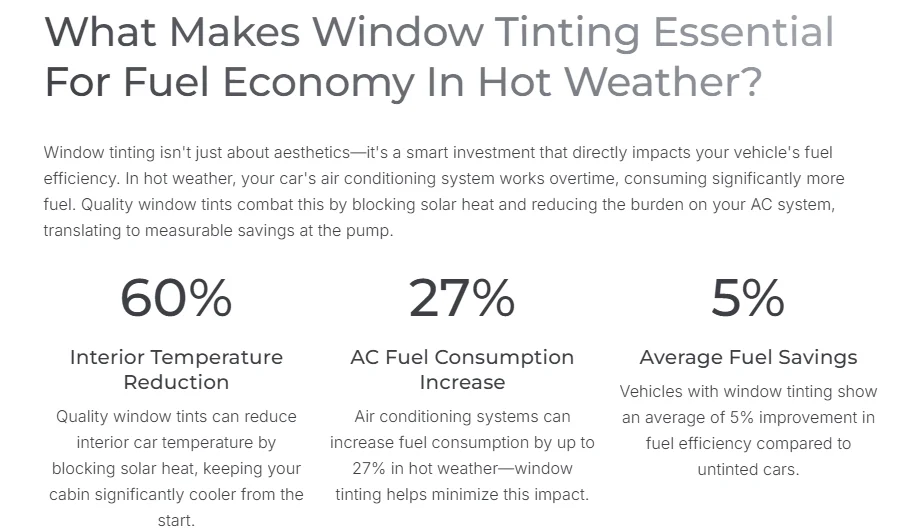
What Makes Window Tinting Essential For Fuel Economy In Hot Weather?
- Up to 60% reduction in interior car temperature due to solar heat blockage by quality window tint (Chicago Auto Pros, 2024)
- Air conditioning fuel consumption can increase by 20-27% in hot weather; tinting reduces AC load by keeping cabin cooler (Chicago Auto Pros, 2024; Extreme Car Audio LLC, 2025)
- Average fuel savings of 5% observed in vehicles with window tinting compared to untinted cars (Baltimore Detail, 2009 study)
- Window tint blocks up to 79% of solar heat gain and up to 99% of harmful UV rays, protecting interiors and reducing cooling demand (Baltimore Detail, 2023; Cookeville Window Tint, 2024)
- Ceramic tint reflect up to 80% of infrared heat, the main driver of cabin temperature rise, without compromising visibility (Extreme Car Audio LLC, 2025)
Visual Chart: Impact of Window Tinting on Fuel Economy in Hot Weather
Factor Untinted Vehicle Vehicle with Window Tint Interior Temperature Increase +40-50°F +15-20°F AC Fuel Consumption Increase +25% +10% Estimated Fuel Economy Impact Baseline +5% Fuel Efficiency
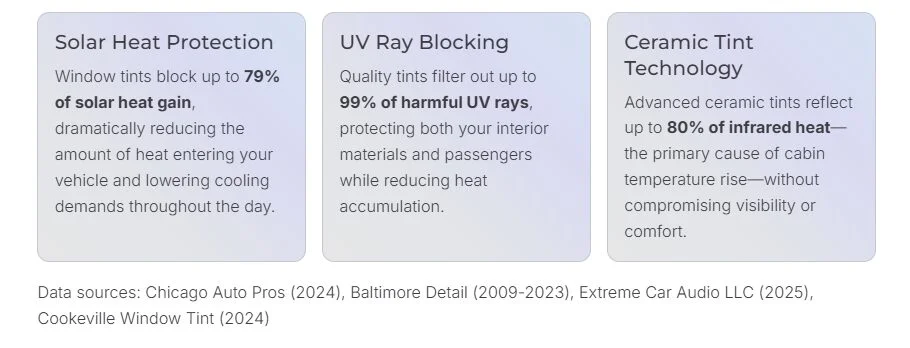


Data sources: Chicago Auto Pros (2024), Baltimore Detail (2009), Extreme Car Audio LLC (2025)
Window tinting is a practical, science-based solution that helps manage cabin heat and reduce fuel usage in hot climates. By lowering air conditioning dependence, it indirectly saves fuel while also protecting vehicle interiors and extending component life. Beyond financial benefits, tinting reduces environmental impacts through lower emissions. With proper installation and adherence to regulations, it becomes a long-term tool for comfort, efficiency, and sustainability.
FAQs
Q1: How Does Window Tinting Improve Fuel Efficiency?
Window tinting reduces the amount of heat entering a vehicle’s cabin. With cooler interiors, the air conditioning system is used less frequently. Reduced AC demand lowers the engine’s workload, which saves fuel over time.
Q2: Which Type Of Window Tint Is Best For Hot Regions?
Ceramic films are the most effective option for extremely hot climates. They block infrared heat and harmful UV rays while maintaining clear visibility. Although more expensive, they provide long-term efficiency and durability benefits.
Q3: Can Window Tinting Help Electric And Hybrid Vehicles?
Yes, window tinting reduces battery drain from air conditioning in EVs and hybrids. Cooler cabin conditions allow the vehicles to operate more efficiently. This directly improves driving range and overall performance in hot weather.
Q4: Are There Legal Restrictions On Window Tinting Levels?
Yes, most regions regulate the level of darkness allowed on vehicle windows. Front windows often have stricter visibility requirements than rear windows. Checking local tint laws ensures compliance and avoids fines or penalties.
Q5: Does Window Tinting Provide Benefits Beyond Fuel Savings?
Tinting also protects vehicle interiors from UV-related damage such as fading or cracking. It extends the lifespan of air conditioning components by reducing stress. These additional benefits preserve vehicle value and lower maintenance costs.
Our Other Blog Posts Related Window Tinting
- Why Window Tinting Matters For Safer Driving In Collisions
- How Window Tinting Blocks Harmful UV Radiation | Comprehensive Guide
- Learn How Window Tinting Protects Vehicle Electronics from Heat
- How Window Tinting Protects Drivers from Seasonal Glare Year-Round
- How Window Tinting Saves Your Car’s Interior and Your Skin
