
Professional automotive window tinting in Colorado commonly costs between $150 and $950. Two front windows may cost approximately $149 to $289, while complete carbon or ceramic packages usually range from $329 to $829. Premium films, large vehicles, windshields, panoramic roofs and old-film removal can raise the total above $1,000.
The price depends on more than how dark the glass will look. Vehicle size, covered windows, film technology, installation complexity and warranty coverage all affect the final estimate.
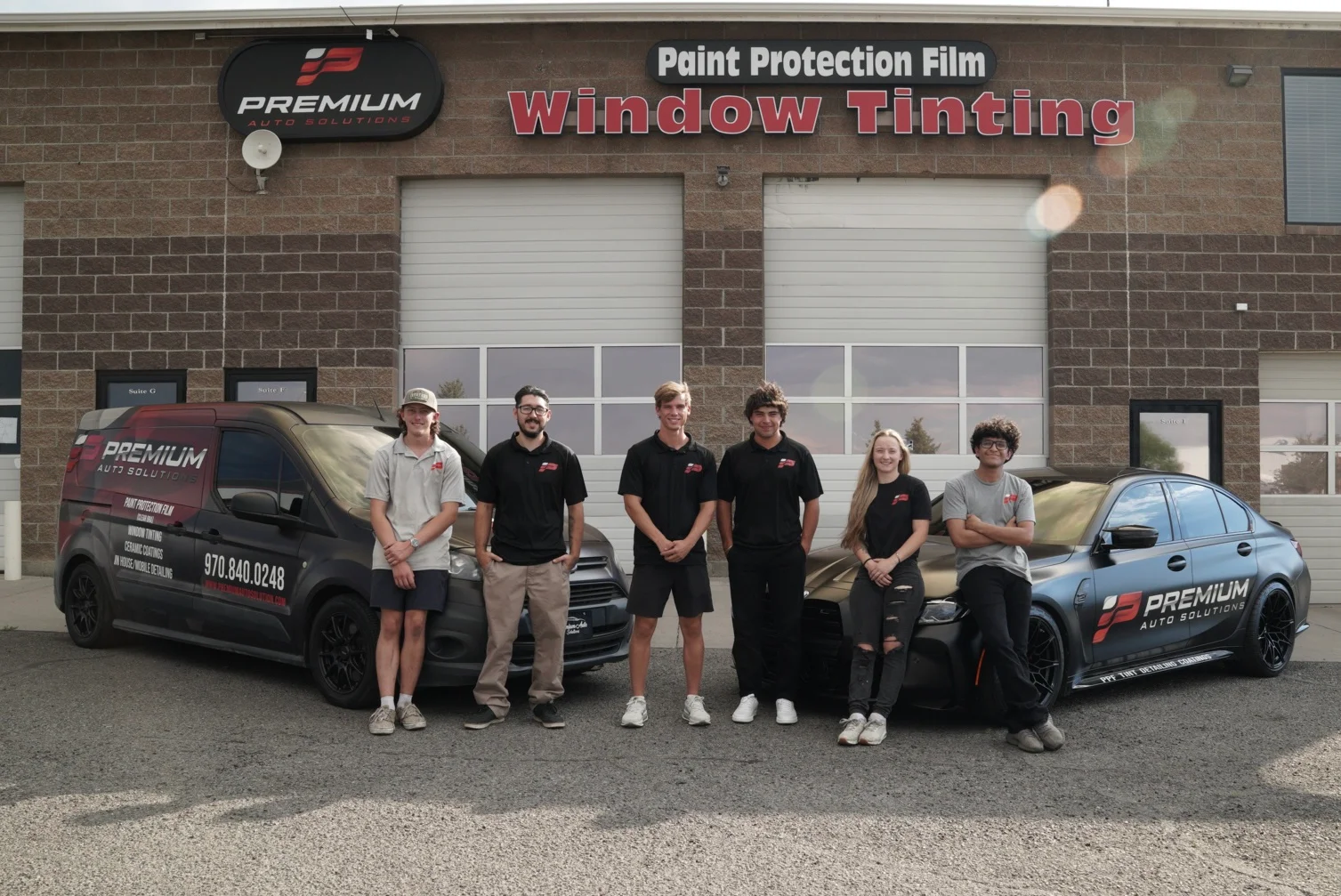
At Premium Auto Solutions, published packages for window tinting services in Montrose, CO currently range from $150 for two front windows with carbon film to $700 for full ceramic coverage on a four-door SUV. This guide compares those real package prices with broader Colorado market ranges.
Window Tint Cost in Colorado at a Glance
The following estimates provide a practical starting point for comparing professional automotive window film prices in Colorado.
| Coverage or package | Typical Colorado price |
| Two front windows | $149 to $289 |
| Full sedan with basic film | $150 to $300 |
| Full sedan with carbon film | $250 to $450 |
| Full sedan with ceramic film | $400 to $750 |
| Full SUV or truck with carbon film | $300 to $550 |
| Full SUV with ceramic film | $400 to $950 |
| Premium ceramic package | $600 to $1,200+ |
| Windshield visor strip | $50 to $100 |
| High-VLT windshield film | $200 to $399+ |
| Sunroof or panoramic roof | $100 to $400+ |
| Existing-film removal | $100 to $250+ |
These are planning ranges, not fixed quotes. Two vehicles in the same category can require different amounts of material and installation time.
A quote should define the film line, covered windows, removal work, and warranty. A low advertised price may cover only two windows or exclude the rear glass, windshield and preparation.
How Much Does Window Tint Cost by Coverage?
Coverage is one of the largest pricing variables. Tinting two front windows requires less film and labor than covering every side window, rear glass, windshield,d and roof glass.
Two Front Windows
Tinting the driver and front-passenger windows commonly costs $149 to $289 in Colorado.
Carbon products generally sit near the lower or middle part of that range. Ceramic and premium nano-ceramic films cost more because they provide stronger solar-energy rejection and long-term color stability.
Confirm whether small triangular windows or front quarter glass are included. A vehicle with separate wing windows may require additional pieces and more edge work.
Premium Auto Solutions currently lists:
- Two front windows with carbon film: $150
- Two front windows with ceramic film: $220
- Two front windows with wing glass and carbon film: $175
- Two front windows with wing glass and ceramic film: $245
Full Car Package
A complete sedan package commonly costs $250 to $750, depending on film technology and coverage.
Some shops use full car to mean the four side windows and rear glass. Others include quarter windows but exclude the windshield and sunroof. The quote should list every covered pane instead of relying on the package name.
A basic or carbon installation usually costs less than a ceramic package. Luxury film lines, difficult rear glass and frameless door windows can move the price toward the upper end.
SUV and Truck Packages
SUV and truck window film commonly costs $300 to $950. Larger vehicles typically have more glass, wider side windows, and a larger rear window than compact cars.
A two-door regular-cab truck may cost less than a large sedan, while a crew-cab pickup can require nearly as much material as an SUV. Vans and three-row SUVs may also have additional quarter glass that increases installation time.
Factory privacy glass does not necessarily reduce the project price. Drivers often add high-performance film over factory-darkened rear glass for heat rejection, even when they are satisfied with its existing appearance.
Windshield Film
A windshield installation commonly costs $200 to $399 or more, depending on the film line and windshield shape.
Windshields are large, curved, and positioned around sensors, mirrors, cameras,s and dashboard components. They require more film and careful heat forming. Luxury vehicles and advanced driver-assistance systems can add complexity.
A Colorado-compliant windshield setup must preserve the required finished VLT. Therefore, you must evaluate the film percentage and factory glass together.
Windshield Visor Strip
A visor strip commonly costs $50 to $100. It covers the permitted top portion of the windshield and helps reduce direct morning or evening glare.
Premium Auto Solutions currently lists visor strips at $80 for carbon and $100 for ceramic film.
Sunroof and Panoramic Roof Glass
Sunroof coverage commonly costs $100 to $400 or more. A compact sunroof requires much less film than a panoramic glass roof extending across most of the cabin.
The installer should confirm whether the roof glass already contains a solar-control layer. Some panoramic roofs require a specific compatible product because of heat absorption and thermal-stress considerations.
Window Tint Prices by Film Type
Film type affects the material cost, performance, warranty, and expected service life. Colorado shops commonly offer several tiers.
| Film type | Typical full-vehicle price | General position |
| Dyed or entry-level film | $150 to $300 | Budget |
| Carbon film | $250 to $550 | Mid-range |
| Ceramic film | $400 to $950 | Premium |
| Advanced nano-ceramic film | $550 to $1,200+ | Highest performance |
Dyed Film
Dyed film is usually the least expensive option. It mainly changes the appearance of the glass and reduces visible glare.
It generally provides less heat rejection and shorter color stability than carbon or ceramic products. Colorado’s strong sunlight can make product quality and warranty particularly important.
Premium Auto Solutions currently focuses its published packages on carbon and ceramic products rather than building its main pricing around entry-level dyed film.
Carbon Film
Carbon film occupies the middle of the market. It offers better color stability and heat performance than entry-level dyed film without reaching the price of premium ceramic products.
A full carbon installation commonly costs $250 to $550, depending on the vehicle and covered glass. Premium Auto Solutions currently lists full carbon packages at $450 for a four-door car or truck and $550 for a four-door SUV.
Ceramic Film
Ceramic film typically costs $400 to $950 for full-vehicle coverage. Premium product lines, large SUVs, and extensive windshield or roof coverage can take the total higher.
Ceramic products use nonmetallic technology to manage solar energy without the signal-interference concerns associated with traditional metallic films. Performance differs significantly among ceramic product lines, so the installer should identify the manufacturer and exact film.
Drivers comparing available options can compare nano-ceramic and standard ceramic film before deciding whether the premium tier matches their priorities.
Window Tint Cost by Vehicle Type
Vehicle classification provides a useful starting point, but glass configuration matters more than the body-style name alone.
| Vehicle type | Carbon pricing range | Ceramic planning range |
| Coupe | $250 to $450 | $400 to $700 |
| Sedan | $250 to $450 | $400 to $750 |
| Regular-cab truck | $200 to $400 | $350 to $650 |
| Crew-cab truck | $300 to $550 | $450 to $850 |
| Compact crossover | $300 to $500 | $450 to $800 |
| Full-size SUV | $350 to $600 | $550 to $950 |
| Van | $350 to $650 | $550 to $1,000+ |
| Luxury or specialty vehicle | $400 to $700 | $600 to $1,200+ |
Coupes and Sedans
A sedan usually has predictable glass shapes and five primary panes: four side windows and rear glass. Small quarter windows, frameless doors, and heavily curved rear glass can increase the price.
A two-door coupe has fewer moving side windows, but those windows may be longer or have a more complicated shape. Fewer windows do not always mean a significantly lower price.
SUVs and Crossovers
SUVs generally cost more because they have additional glass and larger rear passenger areas. Three-row models may include side quarter windows that require separate film pieces.
Large rear hatch glass also takes more material and heat-forming work than the rear window on many sedans.
Pickup Trucks
Truck pricing depends heavily on cab style. A regular-cab truck may need only two side windows and the rear glass, while a crew cab has four door windows and potentially divided rear glass.
Sliding rear windows and multiple rear-glass sections can also increase the number of pieces that must be measured, cut and installed.
Luxury Vehicles and EVs
Luxury vehicles, electric vehicles and performance cars can have complex frameless glass, large windshields, panoramic roofs, sensors and tightly fitted interior trim.
The higher price is not simply based on the vehicle’s value. It reflects the additional preparation, access limitations and precision required around sensitive components.
Current Premium Auto Solutions Package Prices
Premium Auto Solutions publishes its carbon and ceramic package prices directly. The amounts below provide a practical local reference within the broader Colorado market.
| Package | Carbon | Ceramic |
| One side window | $85 | $115 |
| Two front windows | $150 | $220 |
| Two front windows with wing glass | $175 | $245 |
| Two-door car or truck | $330 | $450 |
| Two-door vehicle with wing or quarter glass | $355 | $475 |
| Four-door car or truck | $450 | $600 |
| Four-door SUV | $550 | $700 |
| Windshield visor strip | $80 | $100 |
| Full windshield | $200 | $340 |
| Sunroof | $100 to $300 | $200 to $400 |
The full-vehicle package covers four side windows and rear glass. Windshield and roof-glass coverage are priced separately.
Vehicle year, make, model, and glass configuration can affect the final estimate. Readers seeking a more localized comparison can review Montrose-specific package costs.
What Factors Affect Window Tinting Cost?
Two quotes are comparable only when they include the same product, coverage, and installation conditions.
Film Manufacturer and Product Line
Ceramic describes a broad product category, not a standardized performance level. Entry-level and premium ceramic products can have different construction, specifications, and warranties.
Ask for the manufacturer and exact product line. A quote that says only premium ceramic does not provide enough information for comparison.
Number and Size of Windows
More glass requires more material and installation time. A vehicle with six separate side panes will generally take longer than one with four similar-sized panes.
Large rear windows, panoramic roofs and oversized SUV glass also increase material use.
Glass Shape and Accessibility
Curved rear glass must be carefully heat-formed. Tight seals, recessed edges, frameless doors and interior panels can make access more difficult.
Some vehicles require additional preparation around cameras, antennas, brake lights or defroster connections.
Existing Film Removal
Remove old window film before replacement. The cost depends on how easily the film releases and how much adhesive remains.
Brittle, peeling, or heavily deteriorated material takes longer to remove than newer film that lifts in complete sections.
Installation Environment
Professional film should be installed in a clean, controlled indoor area. Airborne dust and rushed preparation increase the risk of visible contamination beneath the film.
A controlled workspace, proper tools, and an experienced installer contribute to the project price.
Warranty Coverage
A manufacturer-backed warranty may protect against bubbling, peeling, discoloration, or adhesive failure. Coverage differs by product and installer.
Ask whether labor is included if the film must be replaced. A film-only warranty may leave the owner responsible for removal and reinstallation.
How Much Does Tint Removal and Replacement Cost?
Professional window-film removal commonly costs about $100 to $250 or more per vehicle. The exact price depends on the number of windows, film condition, adhesive residue, and whether rear defroster lines are involved.
Removal costs may be calculated:
- Per window
- By vehicle size
- As a fixed package
- By labor time
- As an add-on to replacement film
Rear glass can be more difficult because you must remove the adhesive and film without damaging the defroster grid. Multiple old film layers, brittle material, and hardened adhesive can also increase labor.
Replacement pricing should separate removal from the new installation. A quote that combines both into one number can make it difficult to compare the new film’s actual price.
Does Tint Darkness Change the Price?
Many shops price by film line and coverage rather than shade. A 50% and 35% film from the same product line may therefore cost the same to install.
The percentage can still affect product availability. Some specialized windshield or nearly clear films are available only within premium product lines and may cost more than darker side-window products.
Colorado compliance is based on the completed window, including factory glass and aftermarket film. Drivers can see how different film percentages appear before selecting a shade, but appearance should not replace measurement.

Is Ceramic Window Film Worth the Additional Cost?
Ceramic film can be worth the higher price when heat rejection, optical clarity, and long-term performance matter more than the lowest initial cost.
The upgrade is easier to justify when:
- The vehicle is driven daily.
- It spends substantial time parked outside.
- The owner expects to keep it for several years.
- The interior contains leather, screens, or sensitive trim.
- The driver wants stronger heat rejection at a legal VLT.
- The vehicle has electronics that make metallic film undesirable.
Carbon remains a practical alternative for drivers who want stable appearance and useful performance without paying for the highest film tier.
Base the decision on the exact products being compared. A quality carbon product may offer better value than an unidentified film advertised only as “ceramic.”
What Should a Window Tint Quote Include?
A complete written estimate should identify:
- Vehicle year, make, and model
- Film manufacturer
- Exact product line
- Film type
- Selected VLT
- Every covered window
- Whether the windshield is included
- Whether sunroof glass is included
- Old-film removal
- Adhesive cleanup
- Applicable taxes or fees
- Installation time
- Roll-down waiting period
- Warranty coverage
- Total price
Don’t accept the term full vehicle without a window list. Windshield, sunroof, and panoramic roof glass are commonly excluded from standard packages.
How Should You Compare Colorado Tint Prices?
Start by comparing equivalent coverage. A $300 quote for four side windows cannot be compared directly with a $600 quote that includes four sides, rear glass, premium ceramic film and a lifetime warranty.
Ask each installer the same questions:
- Which film line is included?
- Which windows are covered?
- Is removal included?
- Is the price different for my exact vehicle?
- Will the completed VLT be measured?
- What does the warranty cover?
- Does a warranty claim include labor and replacement?
- How long will the vehicle remain at the shop?
Transparent answers are more useful than the lowest advertised number. The objective is to understand what the price buys and whether the completed installation fits the vehicle, Colorado law, and the owner’s expectations.
The International Window Film Association’s guide to automotive window film cost factors explains that pricing depends on film quality and type, the vehicle model, and the amount of glass being covered. Identify these details before comparing estimates from different installers.
Conclusion
Automotive window tinting in Colorado commonly costs between $150 and $950. Two front windows sit near the lower end, while complete ceramic packages for large SUVs, luxury vehicles and projects including windshield or roof glass approach the upper end.
Film technology, vehicle size, covered windows, removal work, installation complexity and warranty coverage determine the final price. Comparing written estimates by product and coverage provides a more reliable basis for your decision than choosing the lowest advertised total.
Frequently Asked Questions
How much does it cost to tint a complete car in Colorado?
Professional full-vehicle window tinting in Colorado commonly costs about $329 to $829 for a car, truck or SUV, depending on the film tier and glass area. Premium ceramic products, windshields, sunroofs, removal, and unusually complex windows can raise the final project total.
How much does ceramic window film cost in Colorado?
Ceramic window film commonly costs about $400 to $950 for complete vehicle coverage in Colorado. The price varies by vehicle size, film line, covered glass, and installer. At Premium Auto Solutions, current ceramic packages are $600 for a four-door car or truck and $700 for an SUV.
How much does tinting two front windows cost?
Tinting two front windows in Colorado commonly costs approximately $149 to $289, depending on the product tier. Premium Auto Solutions currently lists two-front-window packages at $150 for carbon film and $220 for ceramic film. Confirm whether the quote includes small quarter windows.
Does an SUV cost more to tint than a sedan?
SUVs usually cost more to tint than sedans because they have larger panes, more glass, and a larger rear window. A statewide ceramic SUV package may cost roughly $400 to $950. Premium Auto Solutions currently lists full SUV packages at $550 for carbon film and $700 for ceramic film.
How much does old window-film removal cost?
Professional removal commonly adds about $100 to $250 or more to a project, although the exact price depends on the number of windows, film condition, and adhesive. Brittle layers, stubborn residue, rear defroster lines and a subsequent replacement installation can increase the total.
Does the tint percentage affect installation price?
Many shops charge by product line, vehicle, and coverage rather than selected darkness. Different shades within one film line may therefore cost the same. The installer must still account for factory glass so the completed VLT complies with Colorado requirements.