When we think about window tinting, most people imagine blocking heat, reducing glare, or improving privacy. But there’s another important, often overlooked benefit—safety during collisions. Vehicle accidents don’t just damage metal frames; they also shatter glass, creating dangerous shards that can injure drivers and passengers in seconds.
Here’s where window tinting becomes more than just an accessory. By adding an adhesive protective layer to the glass, tinting films act like an invisible shield. They don’t make glass unbreakable, but they hold broken pieces together, reducing the chances of flying shards. This single function can make the difference between minor scratches and severe injuries during a crash.
Introduction To Safety Role Of Window Tinting
Window tinting has long been promoted for comfort and efficiency. However, safety is one of its strongest yet least talked-about features. Films are engineered not only to block sunlight but also to enhance the resilience of the glass itself.
By holding shattered glass together, tinting adds a layer of accident protection. This effect is especially important in side-window collisions, where passengers are more exposed. When paired with seatbelts and airbags, tinted windows act as part of the broader safety ecosystem of modern vehicles.
Why Shattered Glass Is A Hidden Danger In Accidents
Glass Breakage During Vehicle Collisions
During accidents, automotive glass can crack and explode under pressure. Side impacts or rollovers increase the risk of shattering. Without reinforcement, pieces scatter across the cabin. This spread of fragments creates multiple points of injury risk.
Risks Of Flying Glass Fragments
Flying glass acts like small blades during a crash. Passengers can suffer deep cuts or eye injuries even when wearing seatbelts. These injuries are often overlooked but can be severe. Window tinting near me helps reduce how far shards can travel inside the car.
Long-Term Injuries From Broken Glass
Even after collisions, untreated glass fragments can remain lodged in the skin or eyes. Such injuries may require surgery or cause scarring. Medical recovery takes longer compared to blunt-force trauma. Tinting reduces the volume of fragments by binding them together.
Understanding The Technology Behind Window Tinting
Construction Of Tinting Films
Window tinting films are made of polyester layers bonded with coatings. These layers create strength and flexibility. They resist scratches, provide UV protection, and reinforce glass. Advanced films use nano-ceramic technology for durability.
Adhesive Properties That Bind Glass
A key feature is the adhesive layer that fuses tightly to window glass. When glass cracks, the adhesive holds pieces in place. This prevents them from scattering freely. It creates a laminated effect similar to windshields.
Differences Between Tinting Film Types
Not all tinting films provide the same safety. Dyed films mainly block light but offer limited strength. Metalized films improve reflection but may interfere with signals. Ceramic films combine clarity, durability, and strong adhesive properties for safety.
How Window Tinting Strengthens Vehicle Glass
Added Layer Of Protection On Windows
Tint films add a secondary surface to the glass. This layer reinforces the structure against impacts. The result is greater resistance to sudden pressure changes. It does not stop breakage but makes it more controlled.
Prevention Of Sudden Shattering
Without tint, glass can burst suddenly into multiple pieces. With tint, the film holds the fragments together. This slows down the breakage process and reduces flying debris. Controlled cracking means reduced injury risks.
Containment Of Broken Pieces After Impact
Tinting keeps cracked glass in one piece. Instead of spreading across the cabin, fragments stick to the film. This makes post-accident cleanup safer as well. It also reduces further injuries to passengers moving after the crash.
Case Studies Of Tinting In Real Collisions
Documented Crash Test Results
Crash tests have shown cars with tinted glass experience fewer interior injuries. Films prevent side windows from bursting inward. Test dummies recorded fewer lacerations compared to non-tinted windows. These results confirm tinting’s safety role.
Testimonials From Accident Survivors
Drivers involved in accidents often report that tinted glass prevented cuts. Survivors describe windows cracking but staying intact. This containment gave them time to exit safely. Personal experiences highlight the value of tinting in emergencies.
Insurance Reports On Reduced Injuries
Insurance case studies show reduced claims for injuries linked to glass cuts. Tinted vehicles often record lower medical expenses after accidents. This makes tinting indirectly beneficial for both safety and financial reasons.
Everyday Scenarios Where Tinting Improves Safety
Protection Against Road Debris
Stones and debris kicked up from other vehicles often hit side windows. Without tinting, glass may crack sharply. With films, impacts are absorbed better. Drivers stay protected against sudden shattering incidents.
Shielding From Accidental Impacts
Everyday accidents such as car doors slamming or small collisions can stress windows. Tint films distribute this stress evenly. This reduces the risk of cracks spreading quickly. It gives windows a longer functional life.
Safety During Severe Weather Events
Hailstorms, strong winds, or falling branches often break glass. Tinted windows resist complete shattering under such conditions. They act as shields, protecting passengers from direct exposure. This is valuable in regions with unpredictable weather.
Difference Between Factory Glass And Tinted Glass
Limitations Of Standard Vehicle Glass
Factory side glass is usually tempered, which breaks into small pieces. While safer than sharp shards, these pieces still scatter. They may cause eye or skin injuries in accidents. Standard glass lacks adhesive containment.
Added Strength Of Aftermarket Films
Adding tint creates an adhesive layer similar to laminated windshields. It prevents pieces from scattering when tempered glass breaks. This added strength makes aftermarket films highly effective. It improves safety beyond factory defaults.
Longevity And Durability Considerations
High-quality films last for years with proper care. They withstand heat, UV exposure, and stress. Over time, they maintain adhesive strength. This durability ensures consistent safety benefits throughout a vehicle’s lifespan.
Legal And Regulatory Aspects Of Safety Tint
Laws On Tint Percentages
Many regions regulate how dark tint can be for visibility reasons. Darker tint may improve heat rejection but must meet legal standards. Regulations focus on balancing safety with law enforcement needs.
Standards For Safety-Certified Films
Some films are tested and certified for safety features. These certifications verify adhesive strength and UV protection. Using approved films ensures compliance and reliability. Not all low-cost films provide this level of quality.
Regional Differences In Regulations
Tint laws vary across states and countries. For example, rear windows may allow darker shades than front ones. Drivers should check local rules before installation. This avoids fines while ensuring safety compliance.
Psychological Comfort Of Having Safer Windows
Peace Of Mind While Driving
Knowing your glass has reinforcement reduces stress on the road. Drivers feel secure against unexpected collisions. This confidence improves focus and reaction times. Safety isn’t just physical but also mental.
Confidence In Passenger Protection
Parents, for example, value tinting for child safety. The assurance that windows won’t burst into dangerous shards is comforting. It shows tinting plays a family-oriented safety role. Passengers enjoy added peace of mind.
Reduced Anxiety About Collisions
Fear of glass-related injuries often increases after accidents. Tinting reduces this anxiety by adding security. Drivers can move forward with less concern. The mental relief complements physical protection.
The Environmental And Practical Benefits Of Tinting
Lower Waste From Glass Replacement
Tinted glass is less likely to require immediate replacement after small impacts. Since fragments remain attached, the damage can be contained. This reduces waste from discarded glass. It also lowers repair needs.
Sustainable Use Of Stronger Materials
High-quality tint films are made to last. Their long lifespan means fewer replacements. Using durable films supports sustainability efforts. It also ensures consistent safety features over years.
Reduced Need For Frequent Repairs
Because tinting strengthens windows, minor cracks are less likely to spread. This prevents frequent glass repairs. Drivers save money and resources by avoiding unnecessary replacements. Safety and savings go hand in hand.
Why Premium Auto Solutions Recommends Window Tinting
Professional Quality Installations
At Premium Auto Solutions, installations are handled with precision. Proper fitting ensures maximum adhesive coverage. This makes the safety features of tinting fully effective. Quality control is always prioritized.
Expertise In Safety-Grade Films
The company uses certified films that are tested for strength. These films provide real protection during accidents. With expert selection, customers receive reliable safety solutions. Expertise ensures correct recommendations.
Commitment To Long-Term Driver Protection
Premium Auto Solutions emphasizes both comfort and safety. Their goal is to provide solutions that protect passengers year after year. By choosing advanced films, they help drivers prepare for emergencies. Safety is central to their services.
Navigate from Vernal to Premium Auto Solutions Now
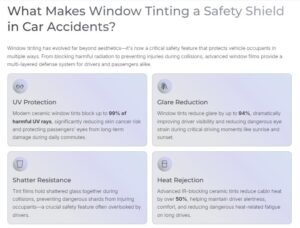
What Makes Window Tinting a Safety Shield in Car Accidents?
- UV Protection: Modern ceramic window tint block up to 99% of harmful UV rays, reducing skin cancer risk and protecting passengers’ eyes (Source: LLumar Performance Data, 2025).
- Glare Reduction: Window tint reduce glare by up to 94%, improving driver visibility and reducing eye strain during critical driving moments (LLumar data).
- Shatter Resistance: Tint films hold shattered glass together during collisions, preventing dangerous shards from injuring occupants.
- Heat Rejection: Advanced IR-blocking ceramic tint reduce cabin heat by over 50%, helping maintain driver alertness and comfort.
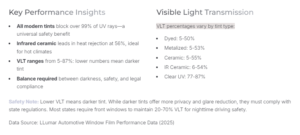
- Legal Tint Limits: States regulate Visible Light Transmission (VLT) to balance safety and privacy; typical front window VLT ranges from 20%-70% depending on state laws (Tint Wiz, 2025).
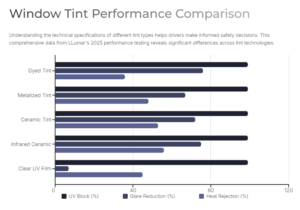
Visual Chart: Window Tint Performance Comparison (LLumar 2025)
Tint Type UV Block (%) Glare Reduction (%) Heat Rejection (%) Visible Light Transmission (VLT %) Dyed Tint >99 57-94 28-44 5-50 Metalized Tint >99 40-94 35-61 5-53 Ceramic Tint >99 50-94 43-62 5-55 Infrared Ceramic >99 56-94 50-62 6-54 Clear UV Film >99 1-13 30-60 77-87
Lower VLT means darker tint; balance needed for legal compliance and safety.
Sources: LLumar Automotive Window Film Performance Data (2025), Tint Wiz State Tint Laws (2025), ShadowFilms Window Tinting Safety Benefits (2025)
Window tinting is far more than a comfort feature—it’s a safety measure that protects against shattered glass injuries during collisions. By holding broken glass in place, tint films reduce the risk of flying shards, add psychological comfort, and provide long-term value. With professional installation from trusted providers like Premium Auto Solutions, drivers gain peace of mind knowing they’ve strengthened one of the most vulnerable parts of their vehicles.
FAQs
Q1: How does window tinting prevent glass injuries?
Window tinting adds an adhesive film layer to glass. This layer holds broken pieces together after impact. As a result, shards don’t scatter freely inside the vehicle.
Q2: Is all window tinting equally protective?
No, not all films provide the same safety. Ceramic and safety-certified films have stronger adhesive properties. They are more effective at preventing glass fragmentation.
Q3: Does window tinting make glass unbreakable?
Tinting does not stop glass from breaking completely. Instead, it controls the breakage process. This reduces flying debris and keeps fragments contained.
Q4: Are safety benefits of tinting legally recognized?
Yes, many films are safety-certified and tested for durability. However, regulations vary depending on region. Always check local laws before installation.
Q5: Why choose professional tinting services?
Professional installers ensure proper application without bubbles or weak spots. They use high-quality, certified films for maximum safety. This guarantees reliable long-term protection.
Our Other Blog Posts Related Window Tinting
- How Window Tinting Blocks Harmful UV Radiation | Comprehensive Guide
- Learn How Window Tinting Protects Vehicle Electronics from Heat
- How Window Tinting Protects Drivers from Seasonal Glare Year-Round
- How Window Tinting Saves Your Car’s Interior and Your Skin
- How Window Tinting Helps Improve Fuel Efficiency In Hot Climates