Have you ever been temporarily blinded by the sun while driving through changing seasons? Seasonal glare creates some of the most dangerous driving conditions you’ll face throughout the year. From blinding snow reflections in winter to intense low-angle sun in spring and fall, each season brings unique challenges to driver visibility.
Window tinting offers a comprehensive solution to these seasonal glare problems. It’s not just about comfort – it’s about safety and protecting your vision during the most challenging driving conditions of the year. When properly applied, quality window tint can dramatically reduce the harsh seasonal glare that creates hazardous driving situations.
Understanding how window tinting protects against seasonal glare helps you make informed decisions about your vehicle’s safety equipment. The right tinting solution can transform dangerous driving conditions into manageable ones, keeping you and your passengers safer throughout the year.
Understanding Seasonal Glare and Its Impact on Driving
Seasonal glare differs significantly from everyday bright light conditions. Each season creates unique combinations of light angles, surface reflections, and atmospheric conditions that challenge your vision in different ways.
The Science Behind Seasonal Light Changes
The earth’s tilt creates dramatic changes in how sunlight reaches your vehicle throughout the year. In winter and summer, the sun follows different paths across the sky, creating distinct glare patterns that affect driving safety.
During winter months, the sun stays lower in the sky, even at midday. This low angle means sunlight hits your windshield at the worst possible angle for visibility. The light comes from directions that your visor can’t effectively block.
Summer brings its own challenges with intense, direct sunlight that can overwhelm your eyes’ ability to adjust. The combination of high-intensity light and heat creates conditions that cause significant eye strain and fatigue.
Different Types of Seasonal Glare Patterns
Each season produces distinct glare patterns that require different protection strategies. Understanding these patterns helps explain why comprehensive window tinting is so effective.
Winter Snow Reflection Glare
Winter creates the most intense glare conditions of any season. Fresh snow reflects up to 95% of sunlight, essentially doubling the light reaching your eyes. You’re dealing with direct sunlight plus reflected light from every snow-covered surface around you.
This reflected light comes from unexpected angles – from the sides, from below, and from behind other vehicles. Your eyes simply can’t prepare for this constant assault of brightness from multiple directions.
The combination of low sun angles and reflective snow creates what many drivers describe as temporary blindness. This isn’t an exaggeration – the intensity can actually prevent you from seeing the road for several seconds at a time.
Spring and Fall Low-Angle Sun Glare
Spring and fall bring the most dangerous glare conditions for commuters. The sun sits at the perfect angle to shine directly through your windshield during peak travel times.
Morning commuters heading east face blinding sunrise glare that can last for the entire drive to work. Evening commuters experience the same problem in reverse, with sunset glare making westbound travel treacherous.
These low angles are particularly dangerous because they last for extended periods. Unlike brief glare from a reflection, low-angle seasonal sun can affect your vision for miles of driving.
How Window Tinting Technology Combats Glare
Modern window tinting technology specifically addresses the challenges of seasonal glare through advanced light management and selective filtering.
Light Filtration and UV Blocking Mechanisms
Window tinting near me professionals understand that effective glare protection requires more than just darkening glass. Advanced tint films use sophisticated technology to selectively filter harmful light while preserving visibility.
Quality tint films block up to 99% of ultraviolet rays, which contribute significantly to glare and eye strain. By eliminating UV light, the films reduce the total light energy reaching your eyes without making everything appear dark.
The best tint films also filter specific wavelengths of visible light that contribute most to glare. Blue light, in particular, scatters more than other colors and creates the harsh glare that makes seasonal driving so challenging.
Selective Wavelength Filtering
Not all light is bad for visibility. The key to effective glare protection is blocking harmful wavelengths while allowing useful light to pass through. This selective filtering is what separates quality tint films from simple dark glass.
Advanced ceramic and carbon tint films can block infrared radiation that causes heat buildup while allowing visible light needed for safe driving. This selective approach maintains visibility while dramatically reducing glare and eye strain.
The filtering also helps with color perception, which is crucial for safe driving. Quality tint films preserve the ability to distinguish between different colored objects while eliminating the harsh glare that makes color recognition difficult.
Seasonal Glare Challenges Throughout the Year
Each season presents unique glare challenges that require comprehensive protection. Understanding these seasonal patterns helps illustrate why year-round tint protection is so valuable.
Winter Driving and Snow Blindness Prevention
Winter driving conditions create the most extreme glare situations you’ll encounter. Snow blindness isn’t just a mountain climbing concern – it affects drivers on snow-covered roads everywhere.
The medical term for snow blindness is photokeratitis, essentially a sunburn on your cornea. Even brief exposure to intense reflected light can cause pain, tearing, and temporary vision loss that persists for hours after exposure.
Window tinting provides crucial protection against these extreme winter conditions. By filtering both direct and reflected light, quality tint films prevent the light overload that causes snow blindness symptoms.
Spring Glare from Wet Surfaces
Spring brings unique challenges with wet road surfaces that act like mirrors. Rain puddles, wet pavement, and dew-covered surfaces all reflect light at unexpected angles.
These reflections are often more intense than the original light source because water concentrates and focuses light rays. A simple puddle can create a blinding flash that temporarily destroys your vision.
The unpredictable nature of spring reflections makes them particularly dangerous. Unlike consistent seasonal sun angles, wet surface reflections can appear suddenly and catch you completely off guard.
Summer Intense Heat and Brightness
Summer combines intense brightness with overwhelming heat that makes driving extremely uncomfortable and potentially dangerous. The combination of high-intensity light and temperature extremes creates conditions that rapidly fatigue drivers.
High-Altitude Sun Exposure
High-altitude areas face unique summer challenges with increased UV intensity and reduced atmospheric filtering. For every 1,000 feet of elevation, UV intensity increases by about 8-10%.
Window tinting Montrose, CO installations must account for these elevated UV levels that create more intense glare and greater eye strain than sea-level conditions. The thinner atmosphere provides less natural filtering of harmful wavelengths.
Mountain driving also involves rapidly changing light conditions as you move between shaded valleys and exposed ridges. This constant light variation requires your eyes to work harder, increasing fatigue and reducing reaction times.
Desert and Open Road Conditions
Open desert and prairie driving presents challenges with unrelenting bright light and minimal shade. These conditions create sustained glare that can cause serious eye strain over extended periods.
The lack of natural shade means drivers face constant bright light exposure without relief. This sustained exposure can cause cumulative eye damage and severe fatigue that affects driving safety.
Heat mirages add another dimension to summer glare challenges. These optical illusions can create false reflections and distort your perception of road conditions and other vehicles.
Fall Light Changes and Visibility Issues
Fall presents rapidly changing light conditions as the sun angle drops and weather patterns shift. The transition from summer to winter light patterns creates adjustment challenges for drivers.
Morning and evening glare become more pronounced as the sun’s path shifts lower. Commute routes that were manageable in summer suddenly become problematic as seasonal light changes take effect.
Fall weather adds complexity with frequent transitions between clear and cloudy conditions. These rapid light changes force your eyes to constantly readjust, creating fatigue and reducing your ability to spot hazards.
Types of Window Tint Films for Seasonal Protection
Different tint film technologies offer varying levels of seasonal glare protection. Understanding these differences helps you choose the most effective solution for year-round driving safety.
Ceramic Tint Performance in Various Conditions
Ceramic tint films represent the premium solution for seasonal glare protection. They use advanced nano-ceramic technology to provide superior light filtering without interfering with electronic signals.
These films excel in all seasonal conditions because they block heat-producing infrared rays while maintaining excellent optical clarity. This combination provides comfort and safety in both summer heat and winter glare conditions.
Ceramic films also offer the best color stability over time. They won’t fade or discolor with exposure to intense seasonal UV rays, maintaining their protective properties throughout their lifespan.
Carbon Tint Seasonal Effectiveness
Carbon tint films provide excellent seasonal protection at a more accessible price point. They use carbon particles to absorb heat and block harmful light wavelengths effectively.
These films perform particularly well in winter conditions where heat retention is beneficial. The carbon particles absorb solar energy, helping to warm your vehicle’s interior during cold months.
Carbon tint also provide good glare reduction across all seasons while maintaining the matte appearance that many drivers prefer over reflective films.
Metallic Tint Weather Resistance
Metallic tint films offer superior heat rejection and durability that performs well across all seasonal conditions. They use microscopic metal particles to reflect heat and light away from your vehicle.
These films are particularly effective in extreme summer conditions where maximum heat rejection is crucial. They can significantly reduce interior temperatures and the cooling load on your air conditioning system.
However, metallic films may interfere with electronic signals, which is a consideration for modern vehicles with extensive electronic systems.
Health Benefits of Reduced Seasonal Glare Exposure
Protecting yourself from seasonal glare provides important health benefits that extend beyond immediate driving comfort. Long-term exposure to intense glare can cause serious eye health problems.
Preventing Eye Strain and Fatigue
Seasonal glare creates intense eye strain that goes beyond simple discomfort. Your eye muscles work overtime trying to adjust to constantly changing light conditions, leading to fatigue that affects your entire body.
Symptoms of glare-induced eye strain include headaches, neck pain, dry eyes, and blurred vision. These symptoms can persist for hours after exposure and may worsen with repeated seasonal glare exposure.
Window tinting breaks this cycle by providing consistent light filtering that reduces the workload on your eye muscles. This protection helps maintain alertness and reduces the fatigue that contributes to driving accidents.
Long-term Vision Protection
Cumulative exposure to intense seasonal glare can cause permanent eye damage over time. UV radiation and intense visible light contribute to cataracts, macular degeneration, and other serious eye conditions.
The damage accumulates slowly and may not become apparent until significant vision loss has occurred. Protecting yourself from seasonal glare now is an investment in your future vision health.
Quality window tinting provides this protection automatically, filtering harmful rays every time you drive without requiring you to remember sunglasses or other protective measures.
Regional Climate Considerations for Tint Selection
Different regional climates create unique seasonal glare challenges that affect tint selection decisions. Understanding your local conditions helps optimize your protection strategy.
Mountain Climate Tinting Needs
Mountain climates present extreme seasonal variations that require comprehensive tint protection. Winter snow reflection combines with high-altitude UV intensity to create particularly challenging conditions.
The rapid elevation changes common in mountain driving create constantly varying light conditions. Your tint needs to perform effectively from valley floors to mountain peaks.
Mountain weather can also change rapidly, requiring tint that performs well in both clear, intense sunlight and overcast conditions with diffused glare.
High-Altitude UV Protection Requirements
High-altitude locations face significantly increased UV exposure that makes quality tint protection essential rather than optional. The reduced atmospheric filtering allows more harmful radiation to reach your vehicle.
Speed and Tech Motoring understands that high-altitude installations require careful consideration of these intensified conditions. The tint percentage and film type must provide adequate protection without compromising visibility.
Altitude also affects temperature extremes, requiring tint films that can handle both intense summer heat and extreme winter cold without degrading or losing effectiveness.
Legal Compliance and Seasonal Safety
Legal tint requirements exist to balance protection benefits with safety considerations. Understanding these requirements helps ensure your seasonal glare protection meets all legal standards.
Colorado State Tinting Regulations
Colorado allows front side windows to have a minimum of 27% visible light transmission, which provides significant glare protection while maintaining legal compliance. Rear windows can be tinted darker for additional comfort and privacy.
These regulations recognize the balance between glare protection and visibility requirements. They allow enough tinting to provide meaningful seasonal glare reduction while ensuring adequate visibility for safe driving.
Professional installers stay current with all state regulations and ensure your tint installation meets both legal requirements and your protection needs.
Safety Standards for All-Season Driving
Legal tint limits consider the need for adequate visibility across all seasonal conditions. The regulations account for low-light winter conditions where excessive tinting could compromise safety.
Quality tint films can provide excellent seasonal glare protection while staying well within legal limits. The key is choosing the right film technology rather than simply going as dark as legally allowed.
Professional installation ensures optimal performance within legal constraints, maximizing your seasonal protection while maintaining full compliance with state regulations.
Professional Installation for Optimal Seasonal Performance
Professional installation is crucial for achieving maximum seasonal glare protection. Proper technique and quality materials make the difference between adequate and exceptional performance.
Quality Application Techniques
Professional installers use specialized techniques that ensure optimal optical clarity and performance. These techniques eliminate bubbles, wrinkles, and other imperfections that could compromise glare protection.
Proper surface preparation removes all contaminants that could interfere with film adhesion. This preparation is particularly important for seasonal performance because temperature extremes can stress improperly installed films.
Professional tools and controlled environments ensure consistent results that perform reliably across all seasonal conditions. This reliability is crucial when you’re depending on your tint for safety in challenging glare situations.
Seasonal Installation Considerations
Installation timing can affect long-term performance, particularly in areas with extreme seasonal temperature variations. Professional installers understand how to time installations for optimal curing conditions.
Temperature and humidity during installation affect how the film adheres and cures. Professional facilities control these conditions to ensure optimal bonding regardless of outside weather.
Proper curing is essential for achieving maximum optical clarity and glare protection. Rushing this process can compromise the film’s ability to provide effective seasonal protection.
Navigate from Vernal to Premium Auto Solutions Now
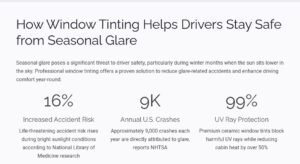
How Window Tinting Helps Drivers Stay Safe from Seasonal Glare
- Glare-Related Accident Risk:
- Glare increases life-threatening accident risk by 16% during bright sunlight conditions (National Library of Medicine).
- Approximately 9,000 crashes annually in the U.S. are caused by glare (NHTSA).
- Window Tinting Effectiveness:
- Premium ceramic window tint block up to 99% of harmful UV rays and reduce cabin heat by over 50%, improving comfort and focus.
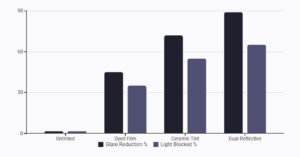
- Dual-reflective window films can reduce glare by up to 89%, significantly enhancing visibility in bright conditions (LLumar data).
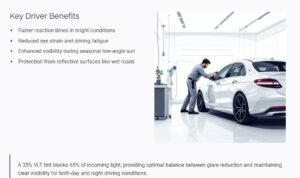
- A 35% Visible Light Transmission (VLT) tint blocks 65% of incoming light, balancing glare reduction with clear visibility day and night.
- Driver Benefits:
- Reduced glare leads to faster reaction times and less eye strain, lowering fatigue and improving overall driving safety.
- Window tinting helps drivers avoid discomfort and disability glare from seasonal low-angle sun and reflective surfaces like wet roads.
[Chart Visual Suggestion: Bar graph comparing glare reduction percentages by tint type (e.g., Untinted vs Dyed vs Ceramic vs Dual-Reflective), alongside accident risk reduction statistics.]
Sources: National Library of Medicine, NHTSA, LLumar Performance Data, TERMINAX Window Film, Pro Tint Orlando
Maintenance and Care Across Seasons
Proper maintenance ensures your window tint continues providing optimal seasonal glare protection throughout its lifespan. Different seasons require specific care considerations.
Winter Tint Care and Cleaning
Winter conditions require special care to protect your tint investment. Ice scrapers should never touch tinted windows, as they can scratch or damage the film surface.
Use only recommended cleaning products that won’t damage the tint material. Harsh chemicals can break down the adhesive and compromise the film’s protective properties.
Allow extra time for defrosting tinted windows. The film can affect how quickly ice melts, so patience prevents damage from forced removal of ice or frost.
Summer Heat Protection for Tinted Windows
Summer heat can stress tint films, particularly lower-quality installations. Parking in shade when possible helps extend film life and maintain optimal performance.
Regular cleaning becomes more important in summer when dust and heat can affect visibility through tinted windows. Clean windows provide better glare protection and maintain safety.
Quality films are designed to handle summer heat extremes, but proper care ensures they continue performing optimally throughout multiple summer seasons.
Window tinting provides comprehensive protection against the seasonal glare challenges that make driving dangerous and uncomfortable throughout the year. From winter snow blindness to summer heat glare, quality tint films offer consistent protection that keeps you safer on the road.
The technology behind modern window tinting specifically addresses seasonal glare through advanced light filtering and selective wavelength blocking. This scientific approach provides real protection rather than just darkened glass that might compromise visibility.
Professional installation ensures your seasonal protection performs optimally while meeting all legal requirements. The combination of quality materials, proper technique, and ongoing maintenance creates a protection system that serves you reliably across all seasons and driving conditions.
Frequently Asked Questions
Does window tinting help with night driving glare from headlights?
Yes, quality window tint can reduce glare from bright headlights, especially LED and HID lights. However, very dark tint may reduce overall visibility at night, so proper tint percentage selection is crucial for safe night driving.
Can window tinting prevent snow blindness while driving?
Window tinting significantly reduces the risk of snow blindness by filtering intense reflected light from snow-covered surfaces. It blocks both direct UV rays and visible light that contribute to the overwhelming brightness that causes snow blindness symptoms.
How long does window tint take to fully cure in different seasons?
Curing time varies with temperature and humidity. Summer installations may cure in 3-5 days, while winter installations can take 2-3 weeks. Full curing is important for optimal glare protection performance.
Will window tinting interfere with GPS or cell phone signals?
Ceramic and carbon tint don’t interfere with electronic signals. Metallic tint may cause some interference, but modern formulations minimize this issue. Most navigation and communication systems work normally with properly installed tint.
Does altitude affect how window tinting performs against seasonal glare?
Yes, higher altitudes have more intense UV radiation and brighter sunlight, making window tinting even more important. The increased UV intensity at altitude makes quality tint films essential for adequate seasonal glare protection.